Campus URP
8-Subsystem Enterprise URP with a LangGraph Multi-Agent Operations Layer
The Engineering Problem
An enterprise-grade, modular-monolith University Resource Planning suite spanning 8 master subsystems. A bounded LangGraph multi-agent layer routes natural-language requests across live campus services while scheduling, cafe POS, library, societies, lost & found, help desk, and IAM retain deterministic control of data and transactions.
- ▶Zero faculty/room/cohort double-booking enforced via CP-SAT hard constraints and bitmask pre-computation.
- ▶ACID row-level locking for zero-trust cafe POS double-spend prevention.
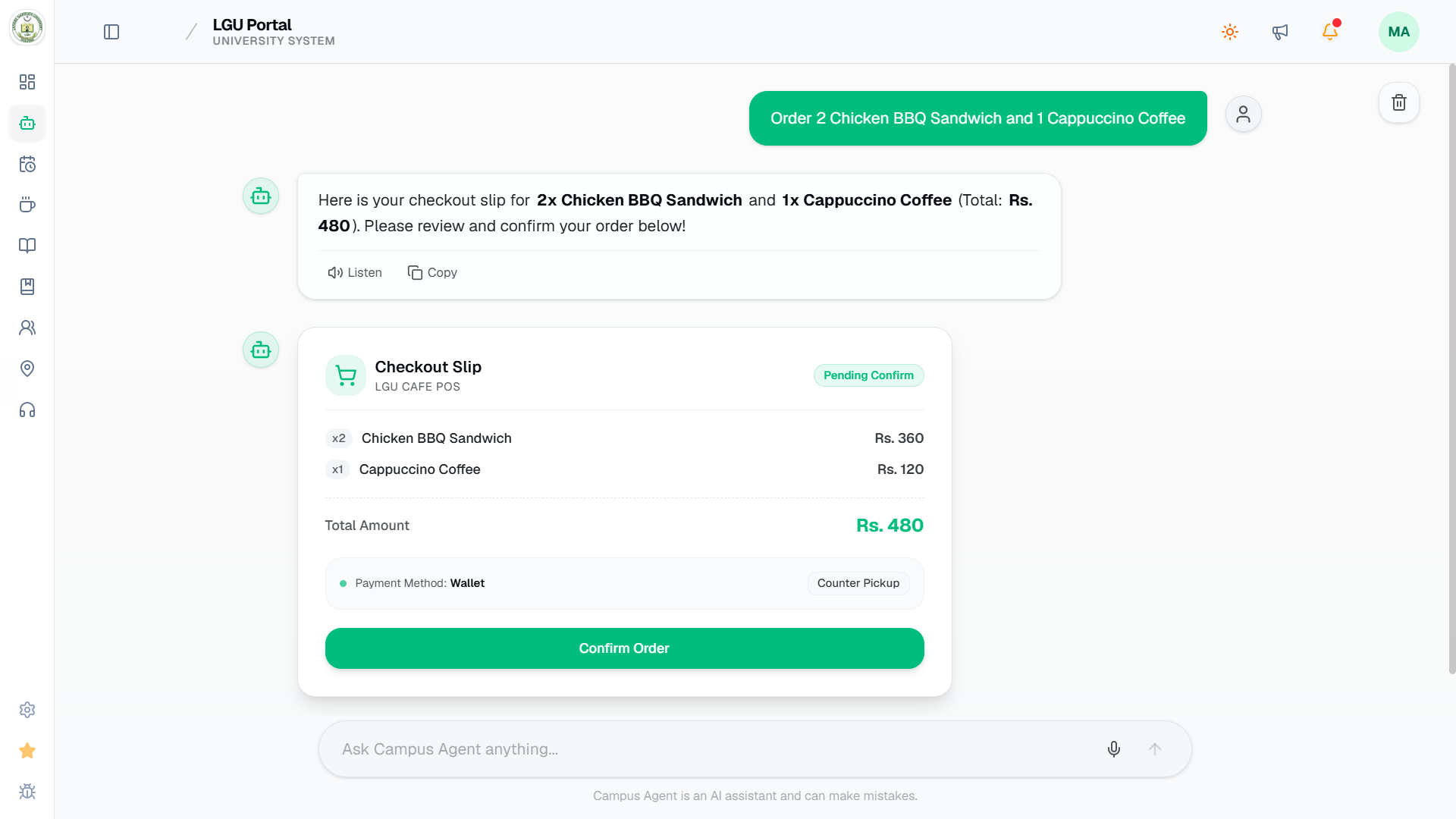
- ▶The AI layer receives trusted request context only after JWT authentication; specialists have isolated tool registries and can draft, never directly execute, operational writes.
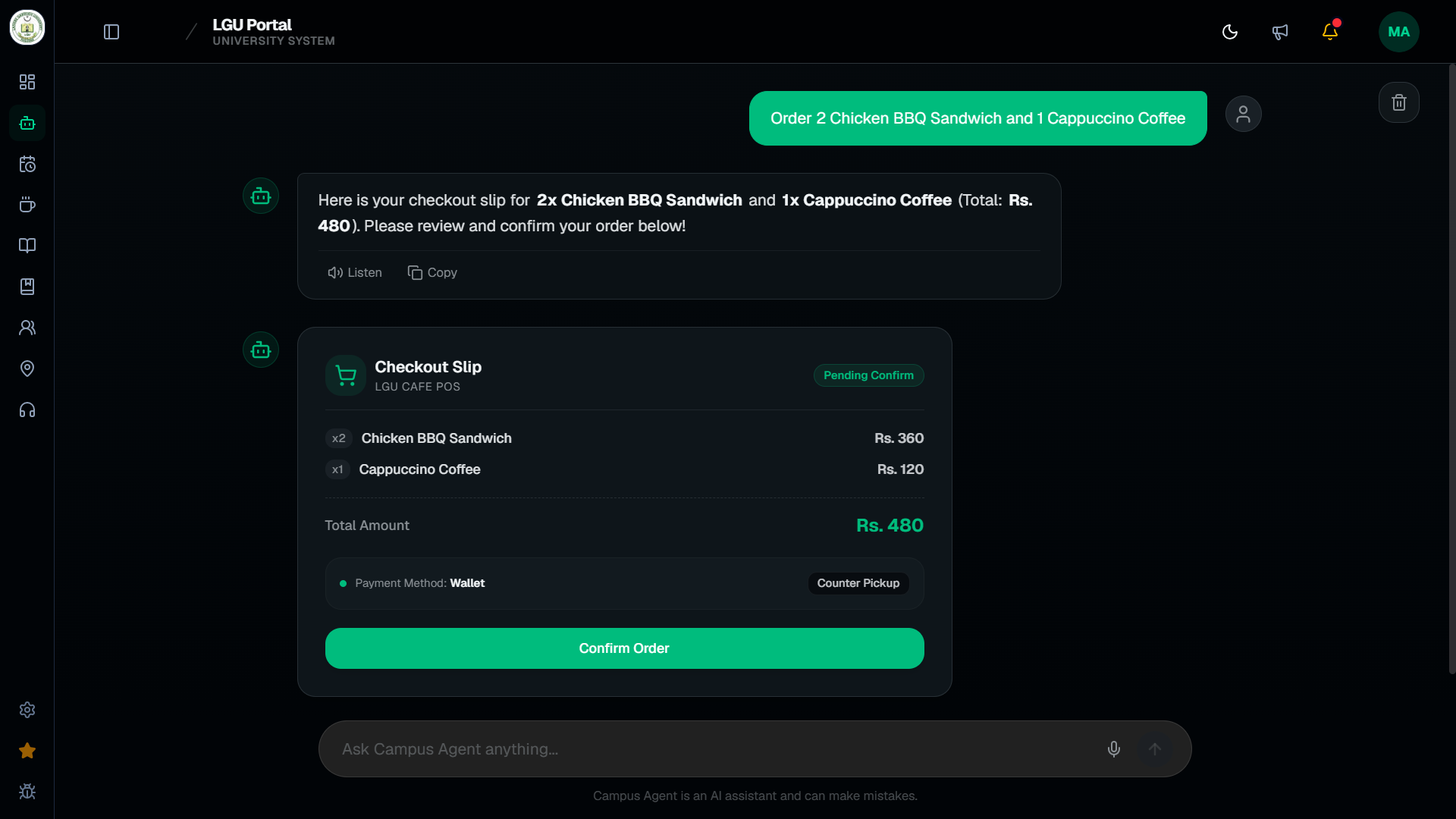
A compiled routing graph connects one primary agent to six domain specialists with isolated tool lists. The LLM interprets intent and drafts typed UI; existing backend services remain authoritative for data, permissions, and writes.
Single deployment unit with strict module boundaries avoids distributed system overhead (service mesh, eventual consistency) while maintaining sub-module isolation across 7 subsystems.
Non-blocking I/O via native binary protocol driver handles concurrent BFF dashboard aggregations, real-time WebSocket broadcasting, and financial row-level locks without thread pool saturation.
Guarantees mathematically optimal constraint satisfaction using interval variables and NoOverlap constraints for room, faculty, and cohort conflict resolution under a strict 2-minute solver timeout.
PostgreSQL-tracked refresh tokens enable instant session revocation and Token Theft Reuse Detection — if a revoked token is presented, all active sessions for that user are purged.
HOVER NODES TO INSPECT SERVICE BOUNDARIES AND IMPLEMENTATION DETAILS
Next.js / TypeScript / Tailwind CSS
Nginx / Docker Compose
FastAPI / Python / Uvicorn
LangGraph / Google Gemini / SSE
Google OR-Tools / CP-SAT
PostgreSQL / Async SQLAlchemy
SMTP / ReportLab / OpenPyXL
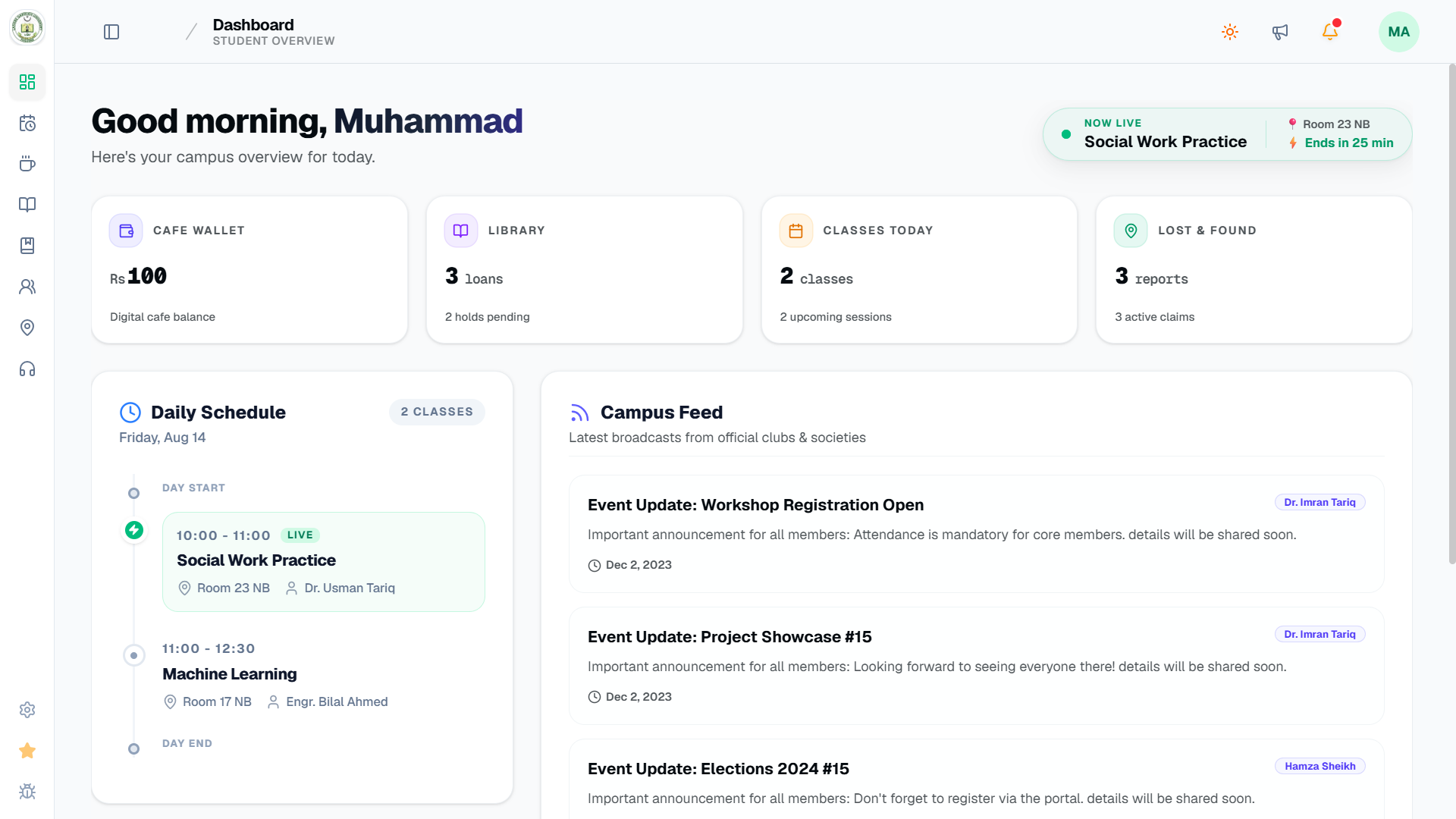
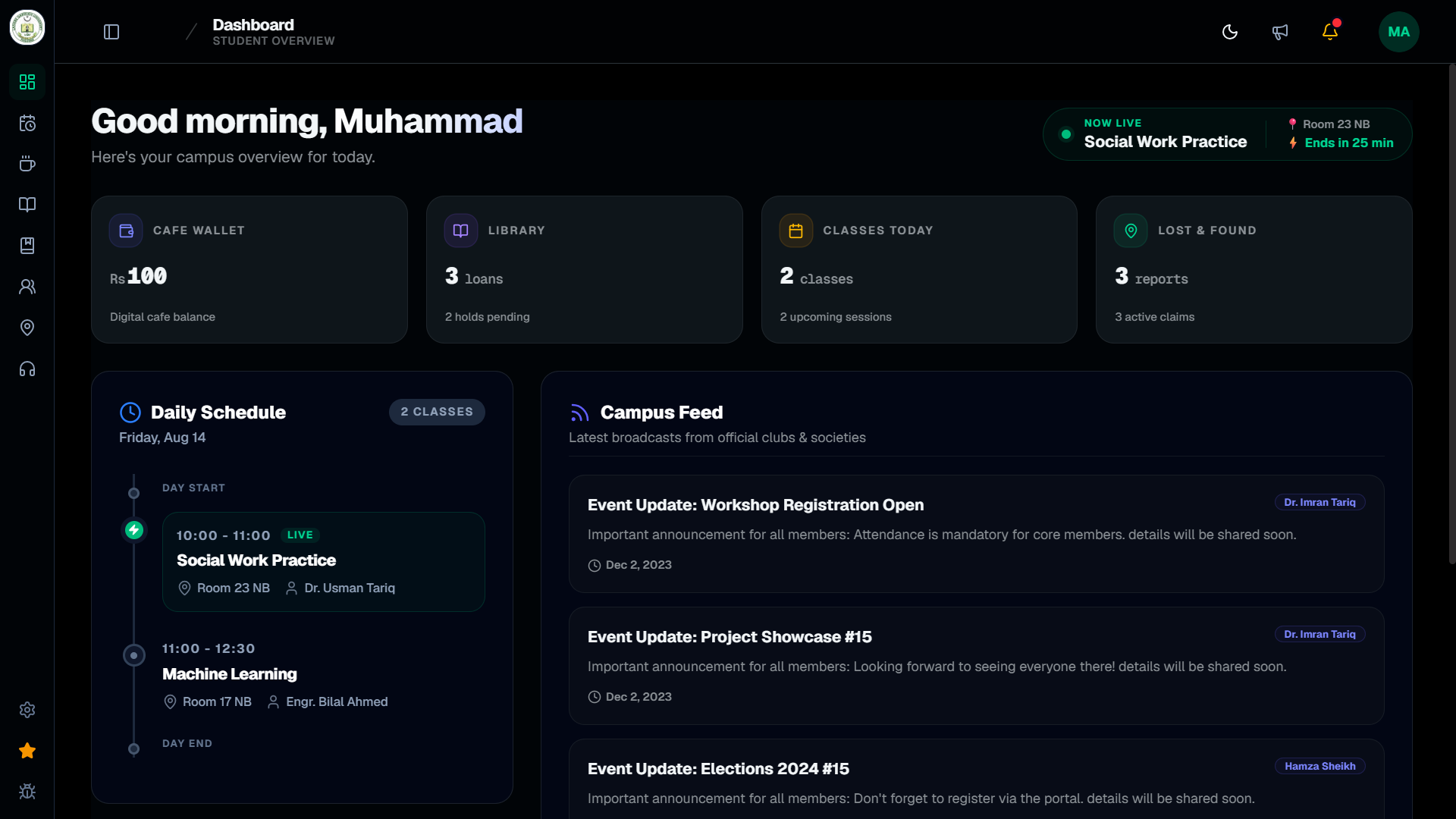
App Router shell serving student, faculty, eight subsystem experiences, and typed generative UI widgets with TanStack Query data fetching.
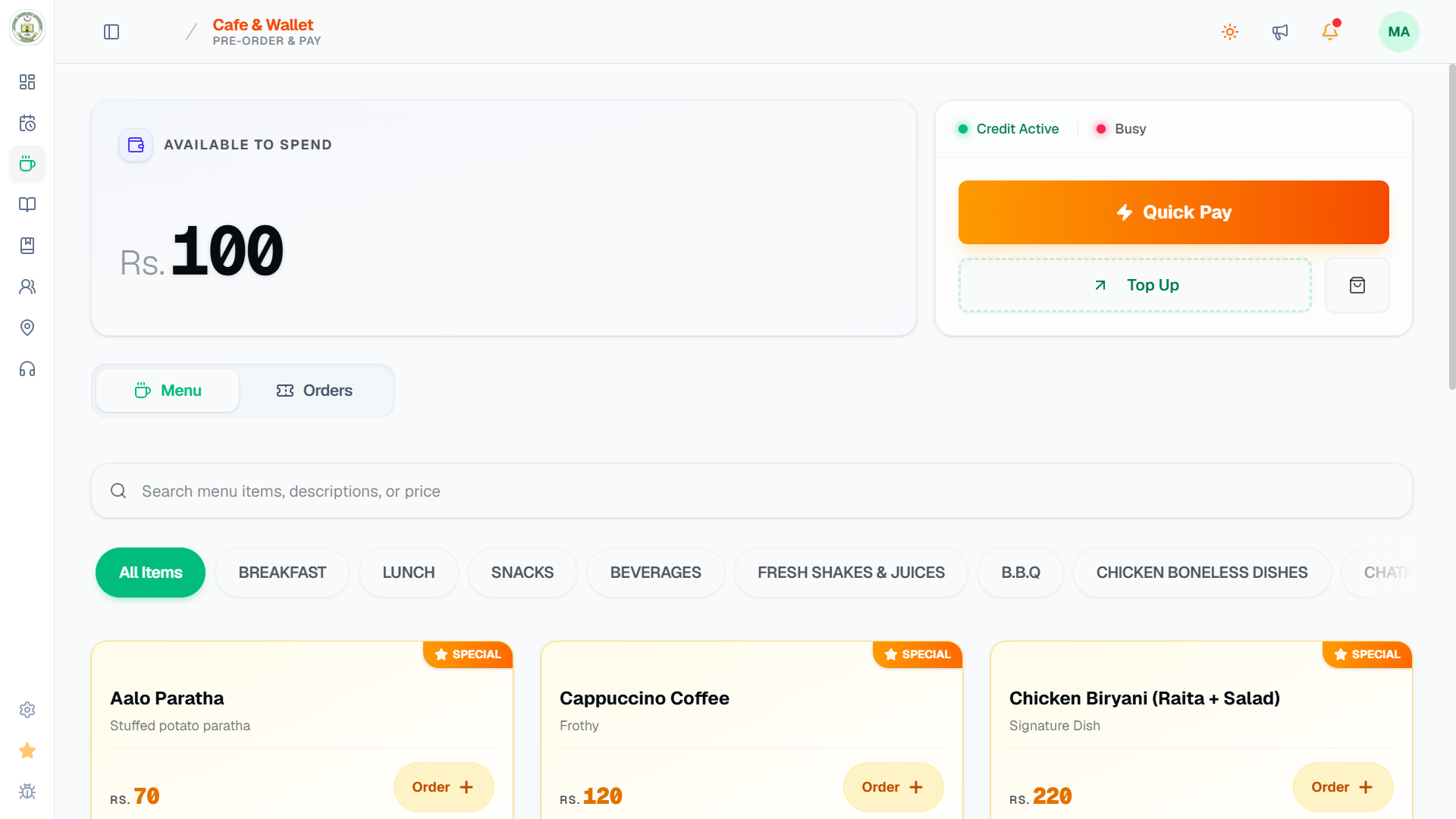
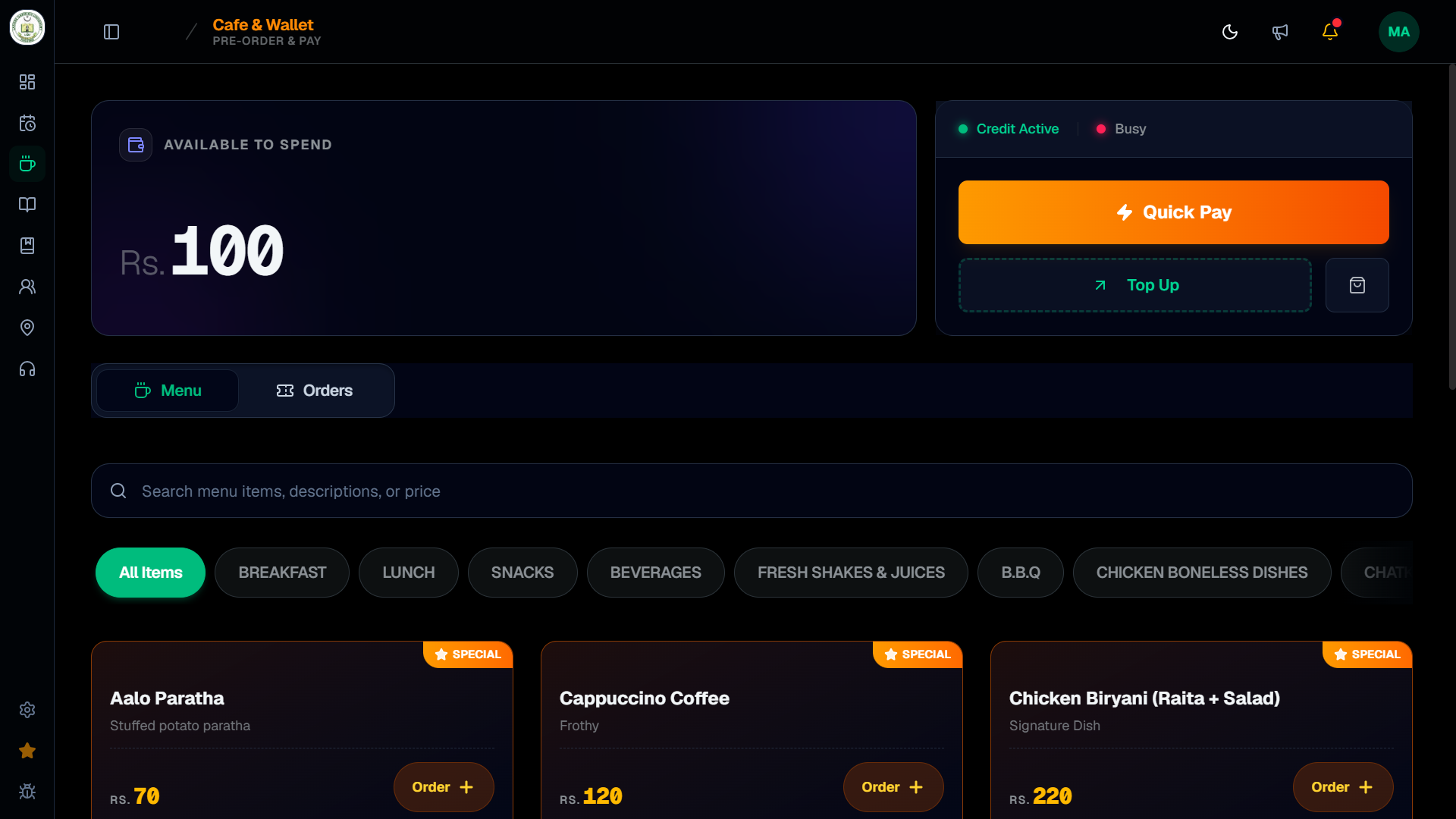
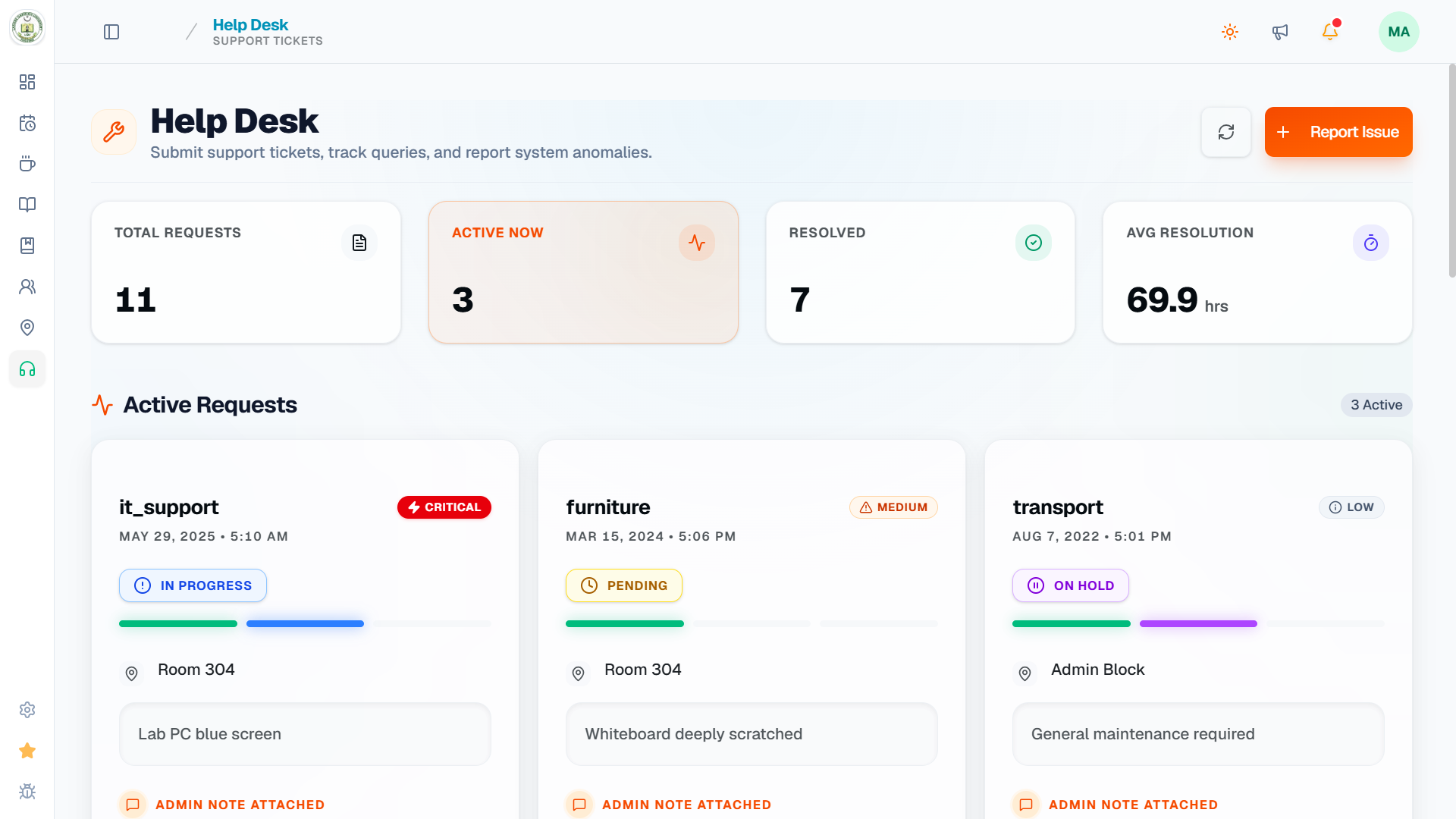
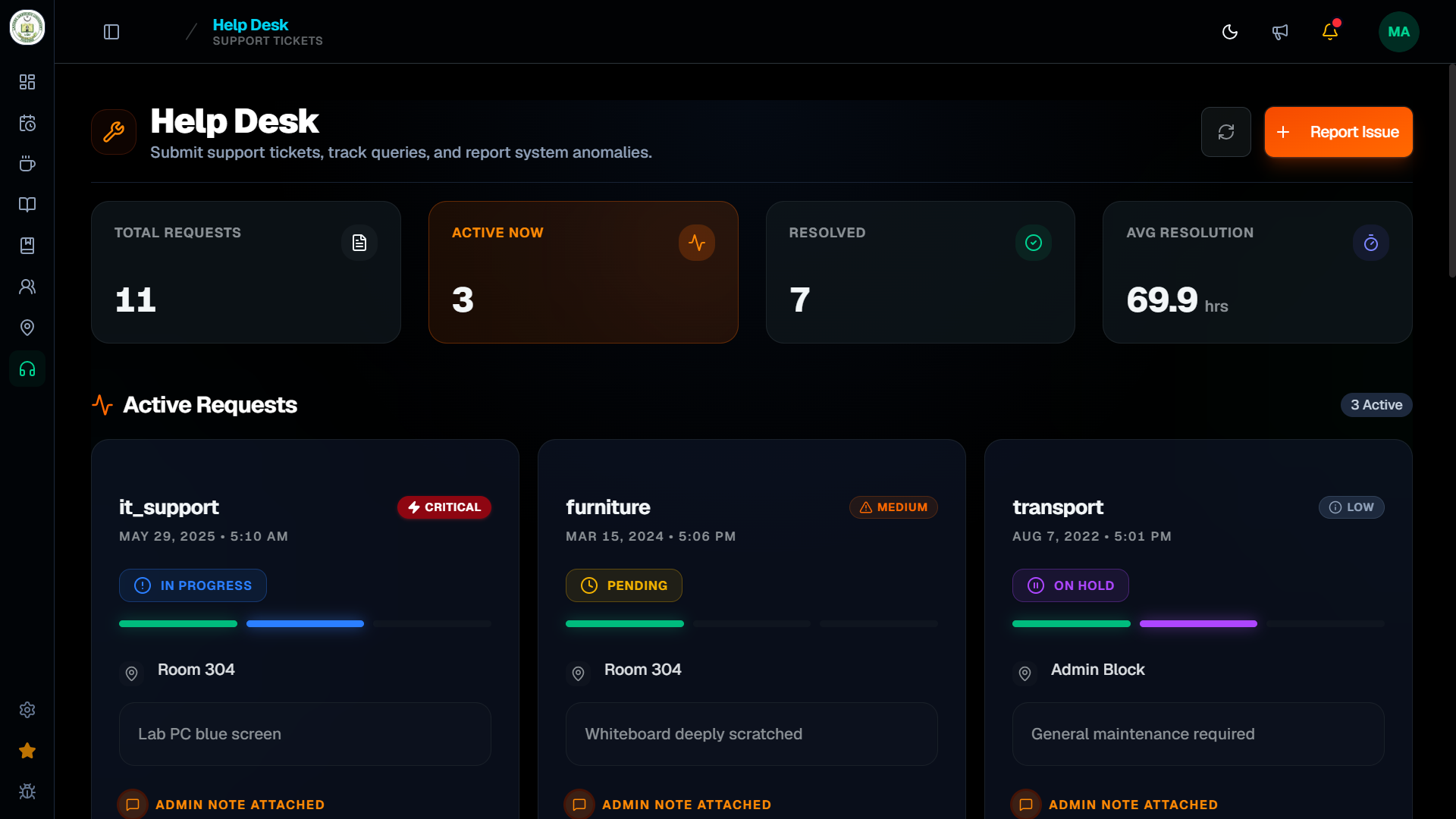
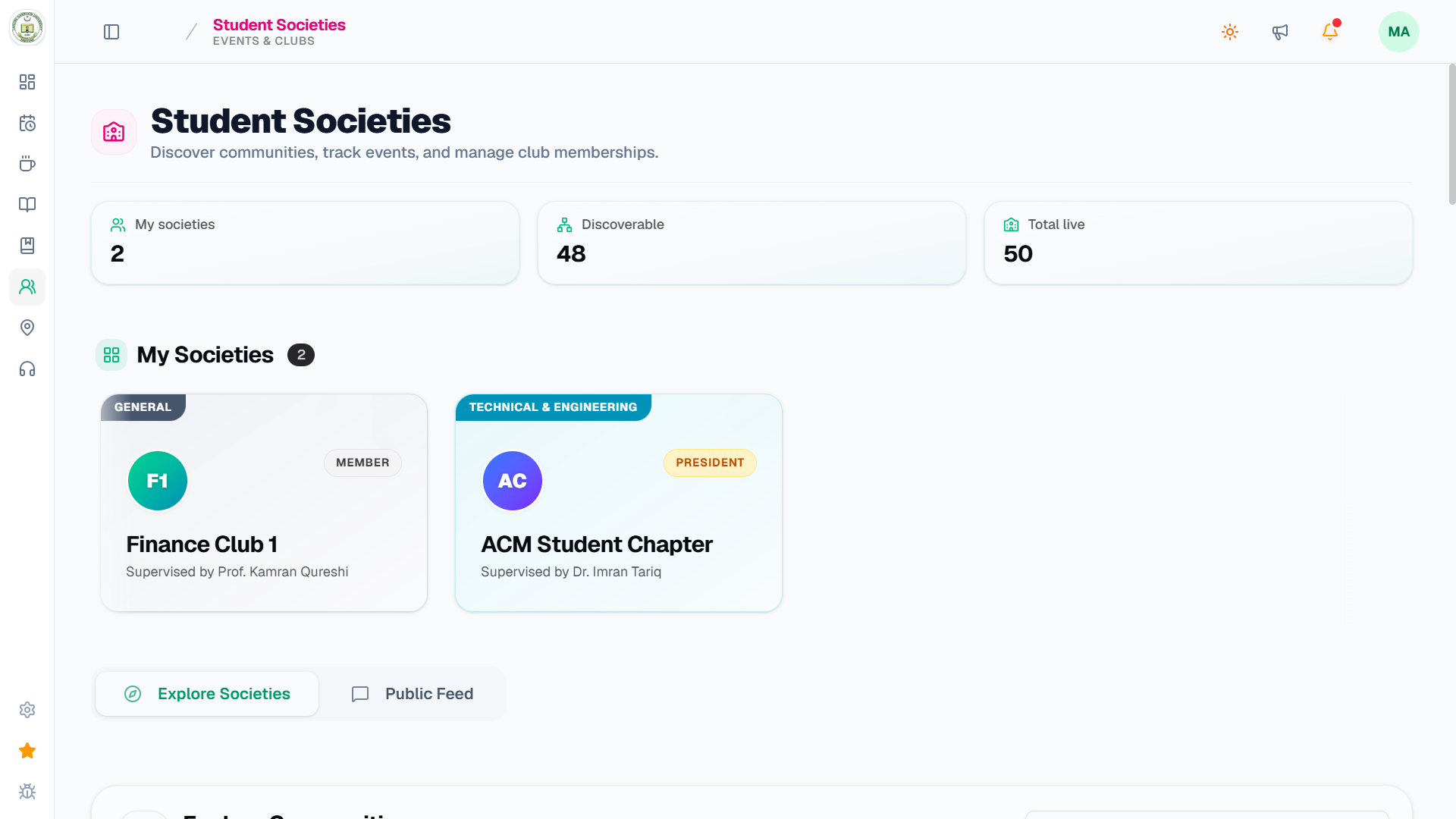
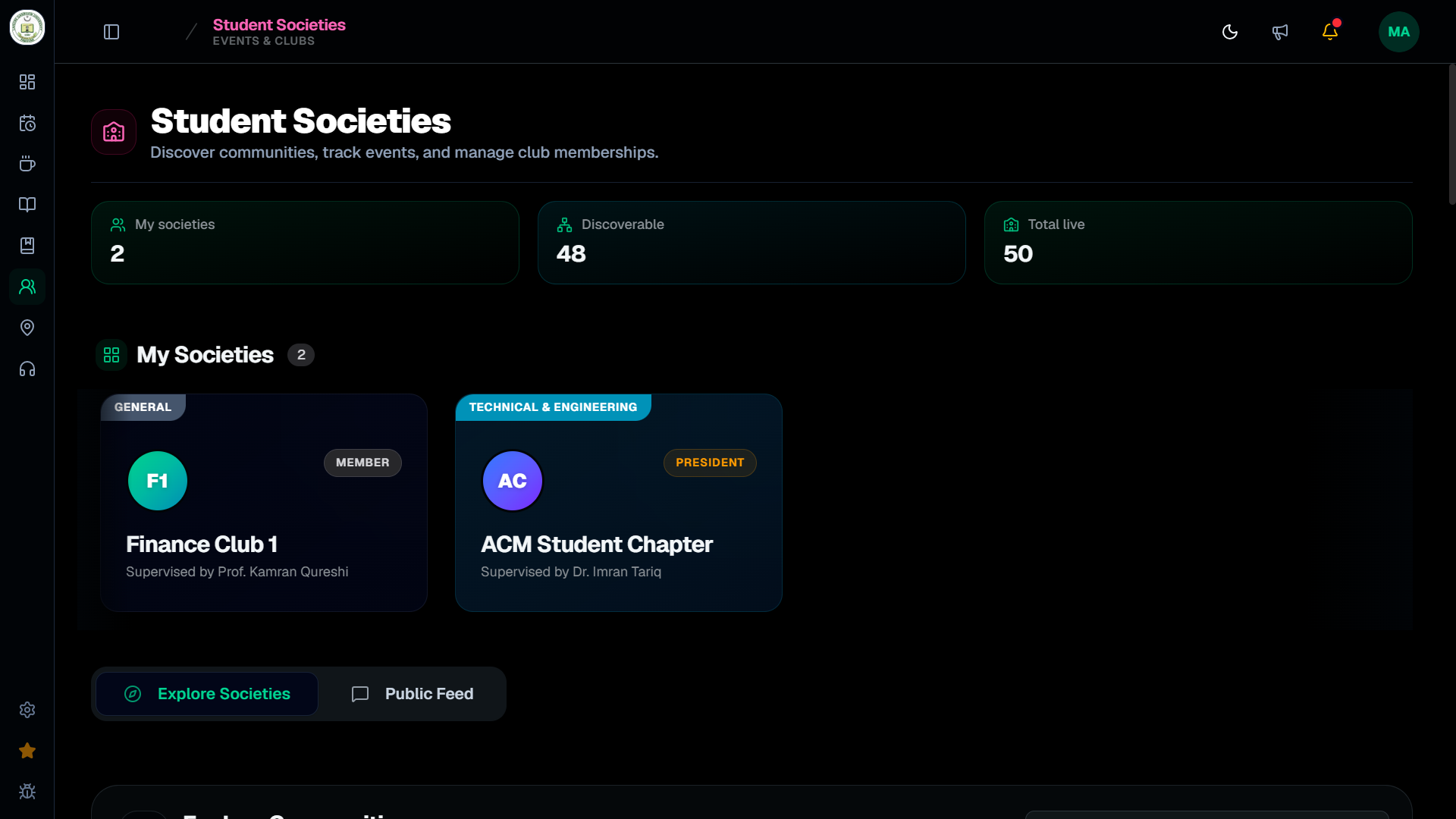
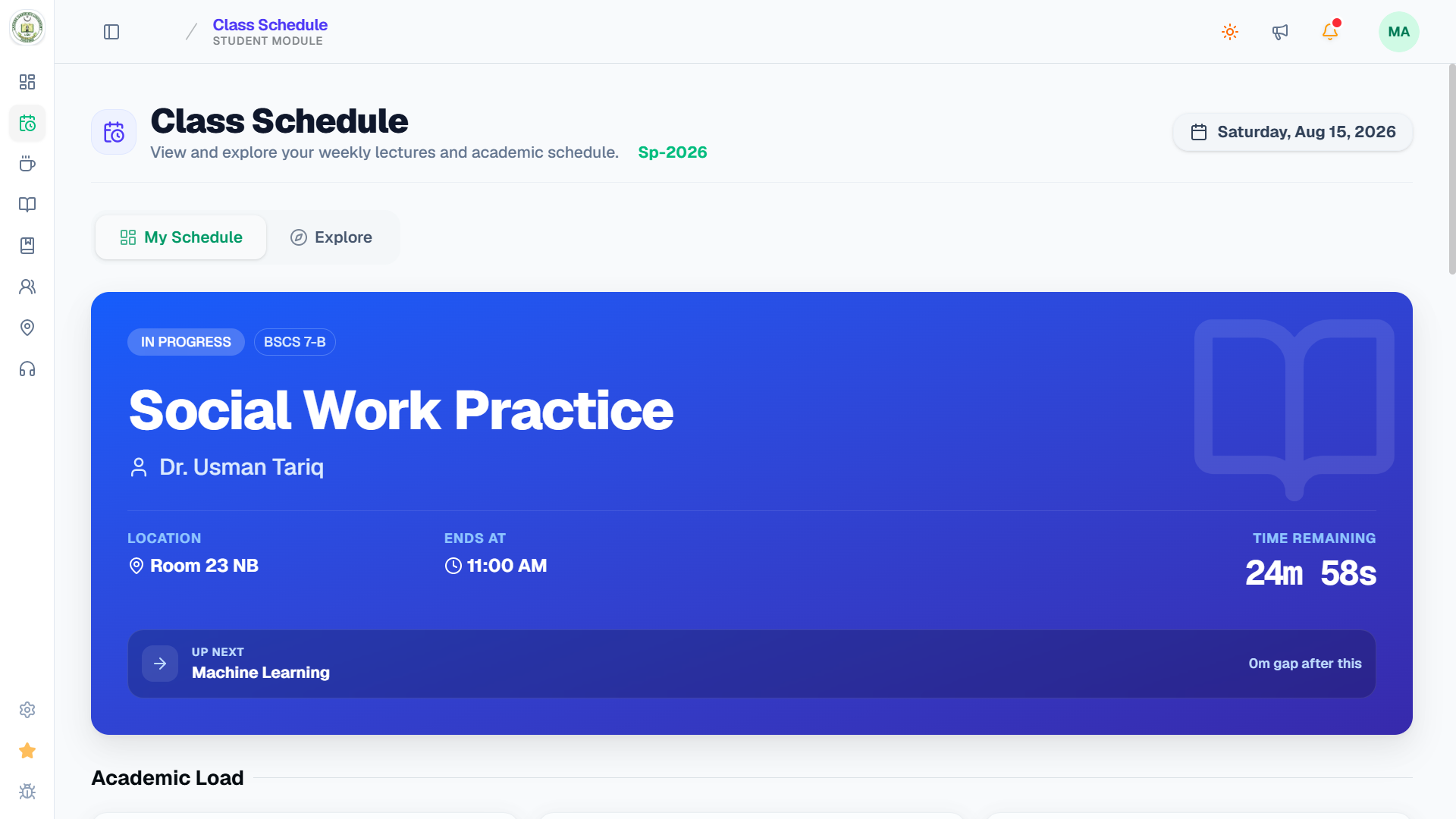
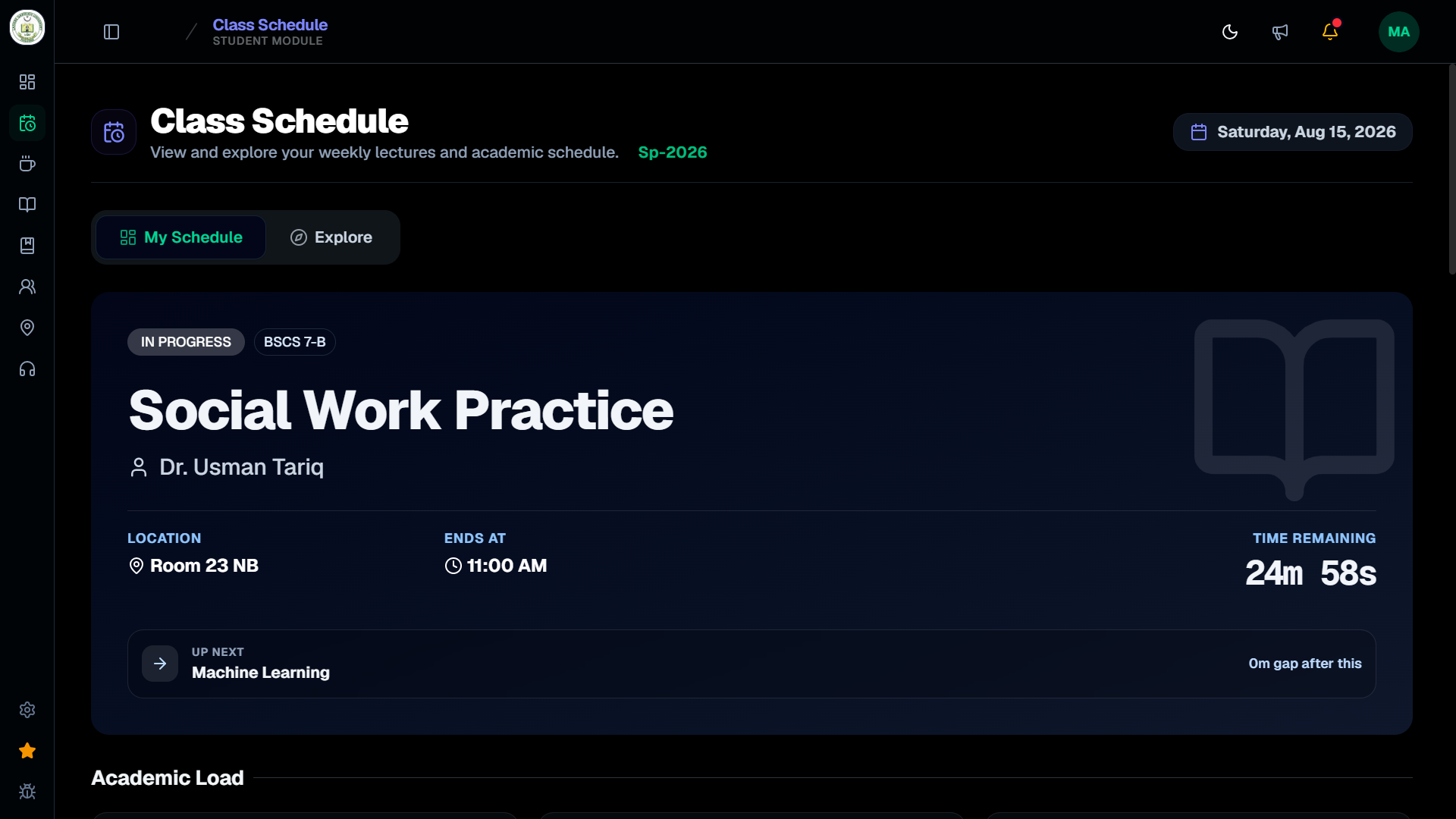
8 MASTER SUBSYSTEMS — 40+ DATABASE TABLES — 250+ API ENDPOINTS
LangGraph routing agent and six domain specialists provide live, tool-grounded campus assistance with SSE streaming, typed UI widgets, isolated tools, and confirmation-gated writes.
Hybrid Roll No/Email identity with stateful JWT Refresh Token Rotation, RBAC enforcement, and Zero Information Leakage password recovery.
CP-SAT constraint solver and recursive backtracking DFS with O(1) bitmask caches, manual builder planner, and Time Travel dashboard.
Role-based mini social network with dual-channel chat (General/Executive), membership lifecycle state machine, and Admin Oversight Mode.
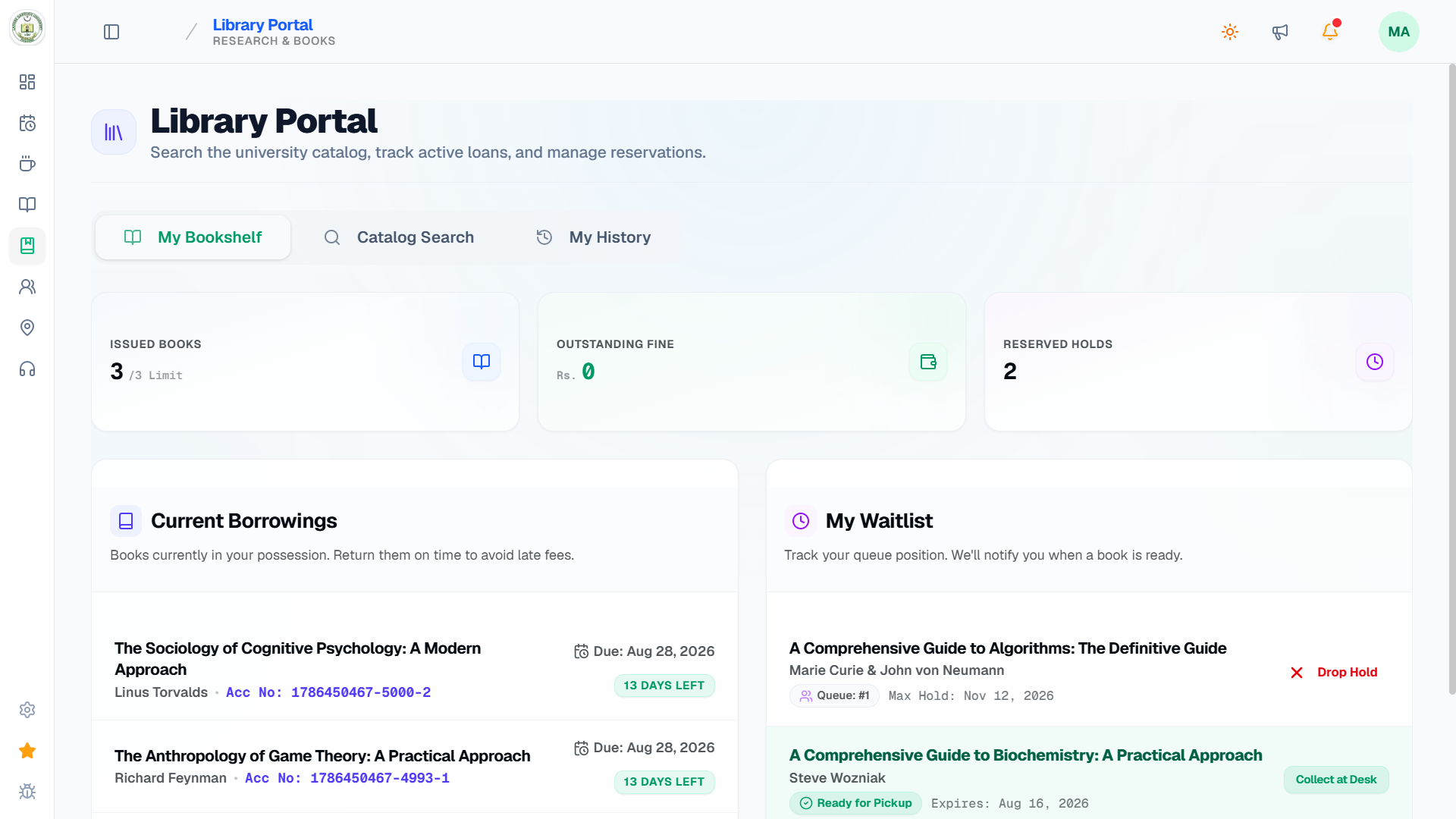
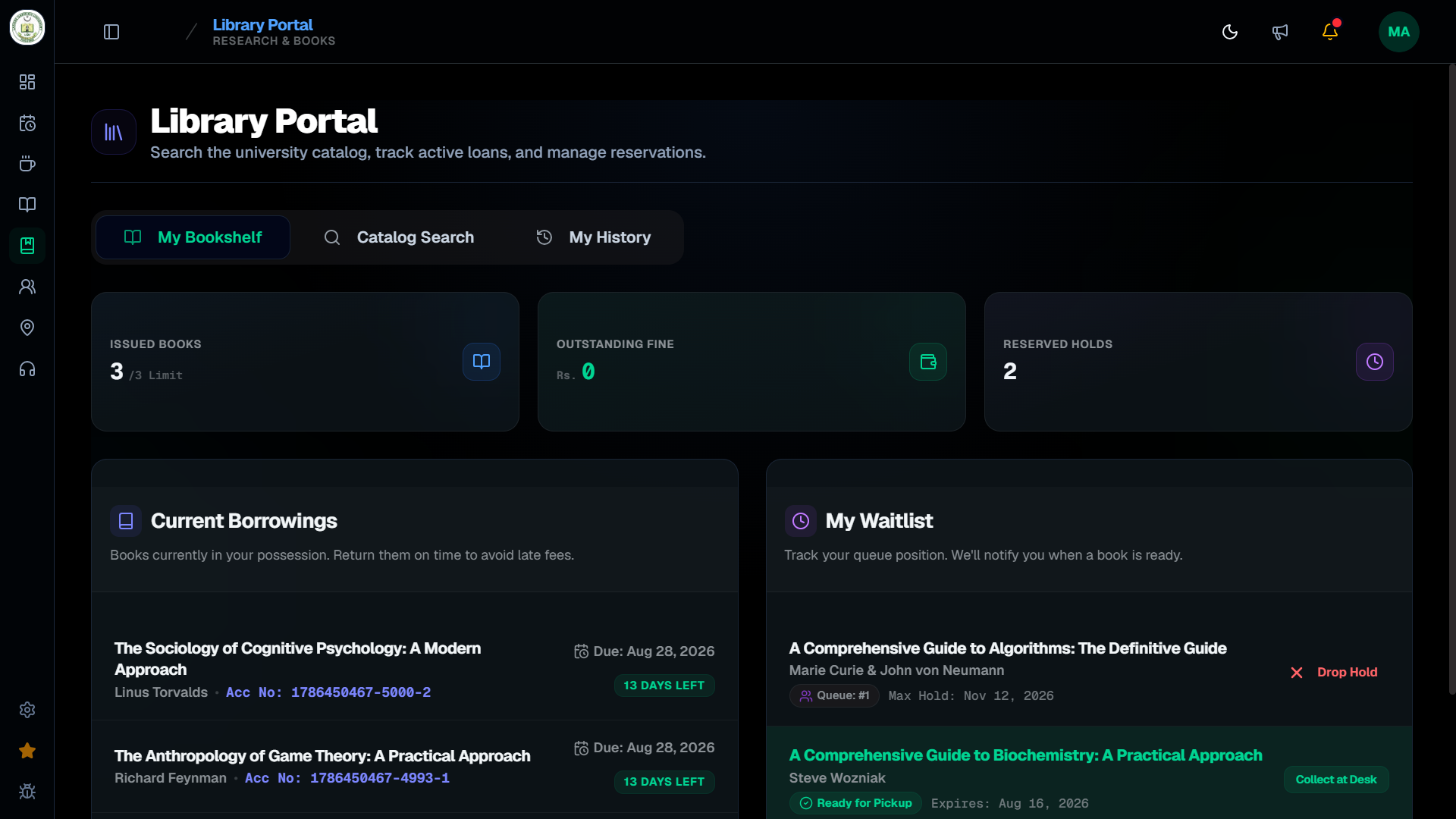
Unified Inventory Architecture separating Book metadata from physical BookCopy assets, with automated Waitlist/Hold-Shelf routing and late-fee financials.
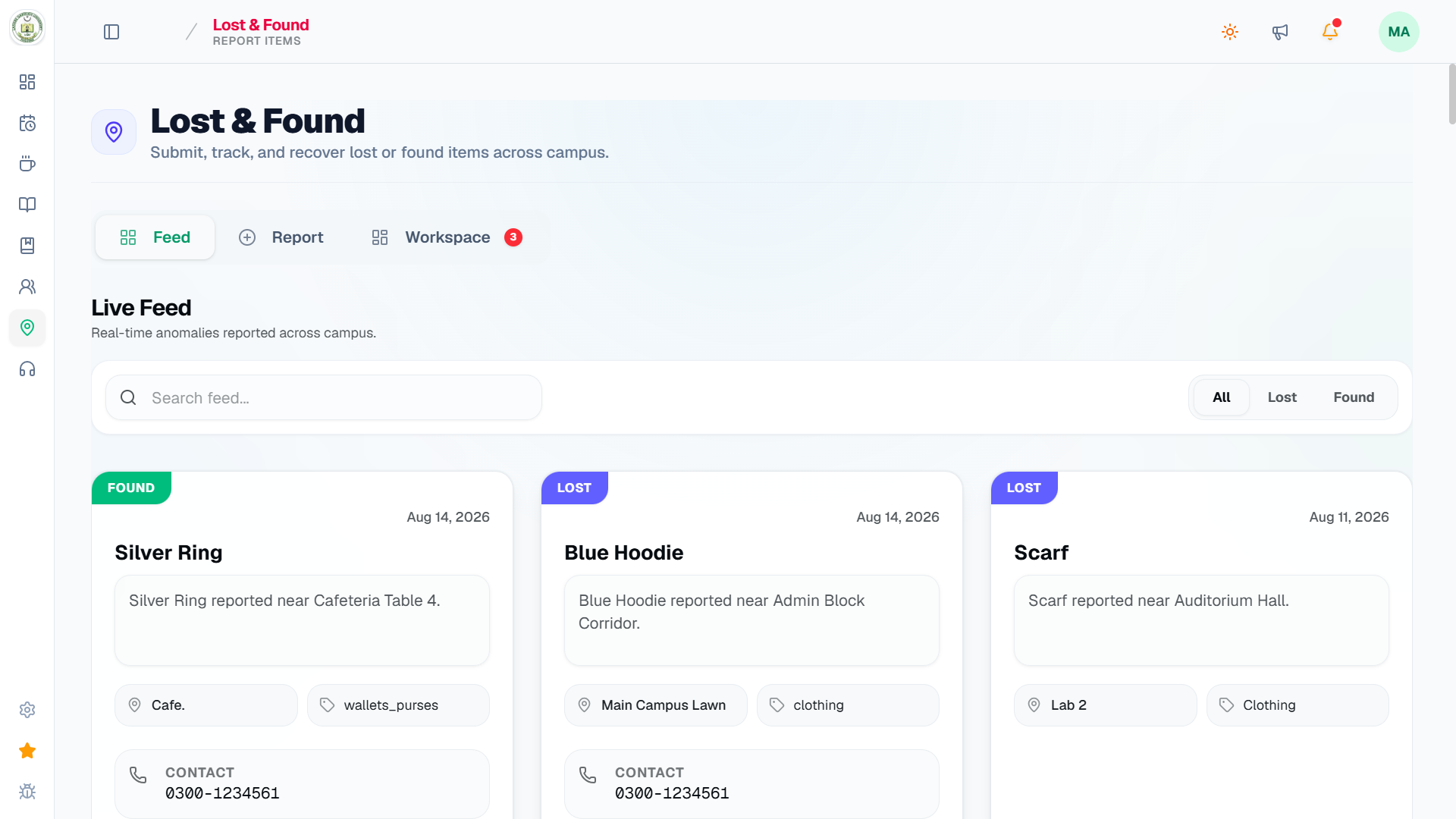
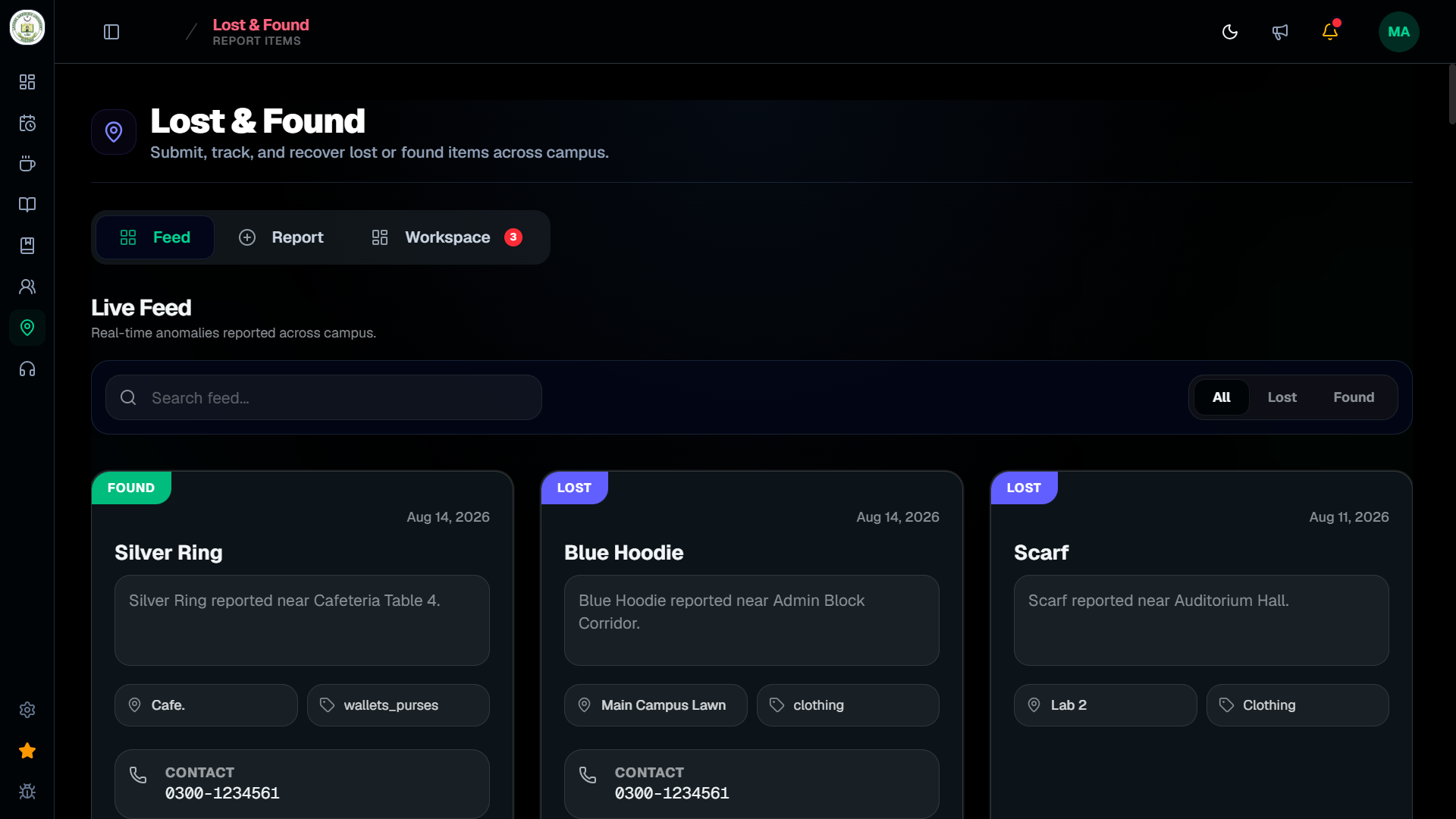
Verified crowdsourcing platform with moderation-first triage, multi-party claim mediation engine, and edit-locking on approved items.
Digital wallet and cash-hybrid POS with Smart Classification (Payment vs Loan), row-level locks (SELECT FOR UPDATE), and Digital Kitchen Display System.
Enterprise facility ticketing across 6 domains (IT, Maintenance, Electrical, Plumbing, Furniture, Other) with SLA severity tiers, War Room hourly ticket heatmap analytics, and custom SQL priority sorting.
Constraint-Based Timetable Optimization
Manual scheduling across shared building pools consumed 1 week of administrative labor per semester for the largest departments, with frequent room and cohort conflicts.
Integrated dual-mode automated scheduling: Google OR-Tools CP-SAT solver (2-minute timeout) for optimal placement, and recursive backtracking DFS (200K node cap) for rapid conflict-free generation.
Bounded Multi-Agent Campus Operations
A campus assistant needs useful, live answers across six operational domains without receiving authority to invent facts or execute transactions.
Built a compiled LangGraph StateGraph with one routing agent, six domain specialists, isolated ToolNodes, low-temperature streaming models, and typed SSE widget events.
Zero-Trust Financial Engine & Concurrency
Concurrent cafeteria checkouts risked race conditions and balance overdrafts during peak meal hours across hundreds of simultaneous users.
Engineered PostgreSQL row-level locks (SELECT FOR UPDATE) on wallet rows with 5-second idempotency deduplication, zero-trust server-side price recalculation, and automated defaulter ban logic.